Neuralink's Blindsight: Can a Brain Implant Help Restore Vision?

Published by
Kosmos Consult2 min read
Neuralink's Blindsight project aims to stimulate the visual cortex directly, but a regulatory designation is not proof of safety, effectiveness or a human vision-restoration trial.
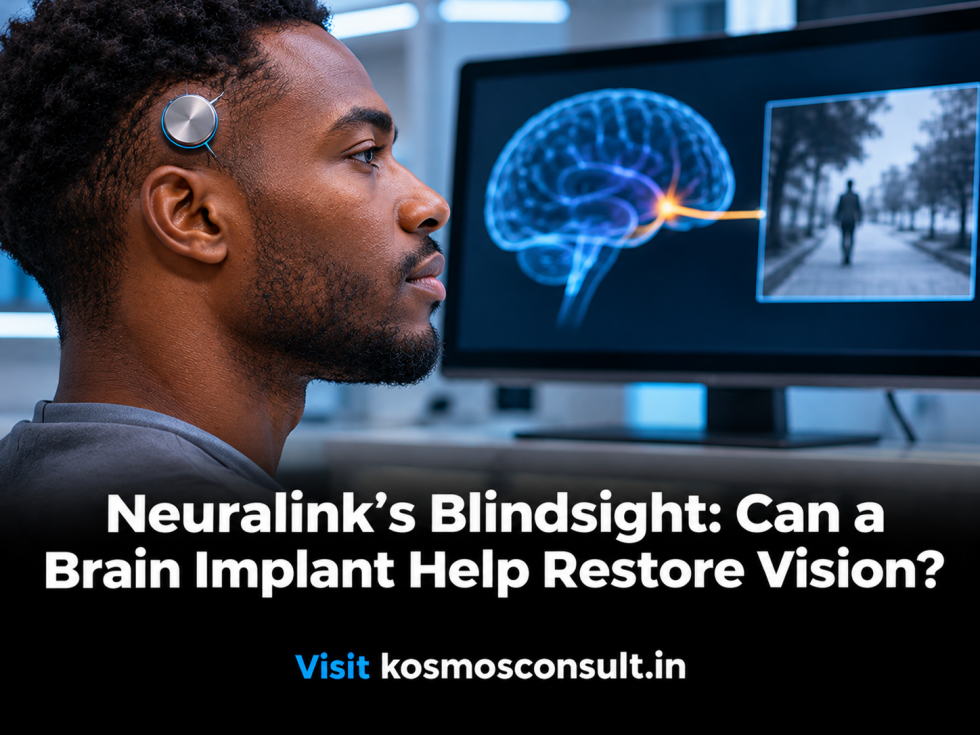
Editorial medical-technology illustration of a brain-computer interface concept, without implying an approved treatment.
On this page
Neuralink's Blindsight project is built around a striking idea: bypass damaged parts of the visual system and stimulate the brain directly, potentially allowing people who have lost their sight to perceive visual information.
It is an ambitious research direction. It is not yet a proven treatment for blindness.
How the Technology Is Intended to Work
Normal vision begins when the retina converts light into electrical signals. Those signals travel through the optic nerve and are processed by the brain.
Neuralink's proposed visual prosthesis aims to bypass the natural eye-to-brain pathway. A camera would capture the surrounding environment, and a specialised implant would deliver electrical stimulation to areas of the brain involved in visual processing.
The company says Blindsight has received FDA Breakthrough Device Designation, a regulatory programme intended to support the development of promising devices for serious conditions.
A Designation Is Not Clinical Approval
This distinction deserves attention. Breakthrough Device Designation does not mean a device has been proven safe and effective, nor does it authorise routine clinical use.
As of the reporting checked for this article, public trial records did not show a registered Neuralink human study specifically testing Blindsight for vision restoration. Neuralink's public clinical-trial information also did not list a Blindsight vision trial.
The Engineering Challenge Is Enormous
The brain does not receive vision as a simple picture on a screen. It processes complex patterns of light, contrast, motion, depth and spatial information.
A visual prosthesis must do more than trigger electrical activity. It must produce signals the brain can interpret in a useful way, and researchers must establish what level of perception is possible, how consistent it is, and whether it can help with everyday tasks.
Safety is equally important. Implanting electrodes into the brain requires careful evaluation of surgical risks, long-term device stability and the effects of repeated stimulation.
What Should We Expect Next?
The meaningful milestones will be transparent trial registration, regulatory progress, human safety data and independently assessed evidence of visual function.
Blindsight could become an important development in neurotechnology. But restoring useful sight is a much higher bar than demonstrating that electrical stimulation can produce a visual sensation.
For now, it belongs in the category of promising research, not established medical treatment.
Reference: https://neuralink.com/trials/visual-prosthesis/ Clinical-readiness analysis: https://drug-dev.com/neuralinks-blindsight-vision-implant-faces-questions-over-clinical-readiness-and-human-trials/