Agile Robots Raises $500 Million as Industrial Robotics Attracts Major Investment

Published by
Kosmos Consult3 min read
German robotics company Agile Robots has raised $500 million in a SoftBank-led Series F round at an $8.5 billion valuation. The company plans to expand in the United States and increase production capacity as demand for industrial and humanoid robotics grows.
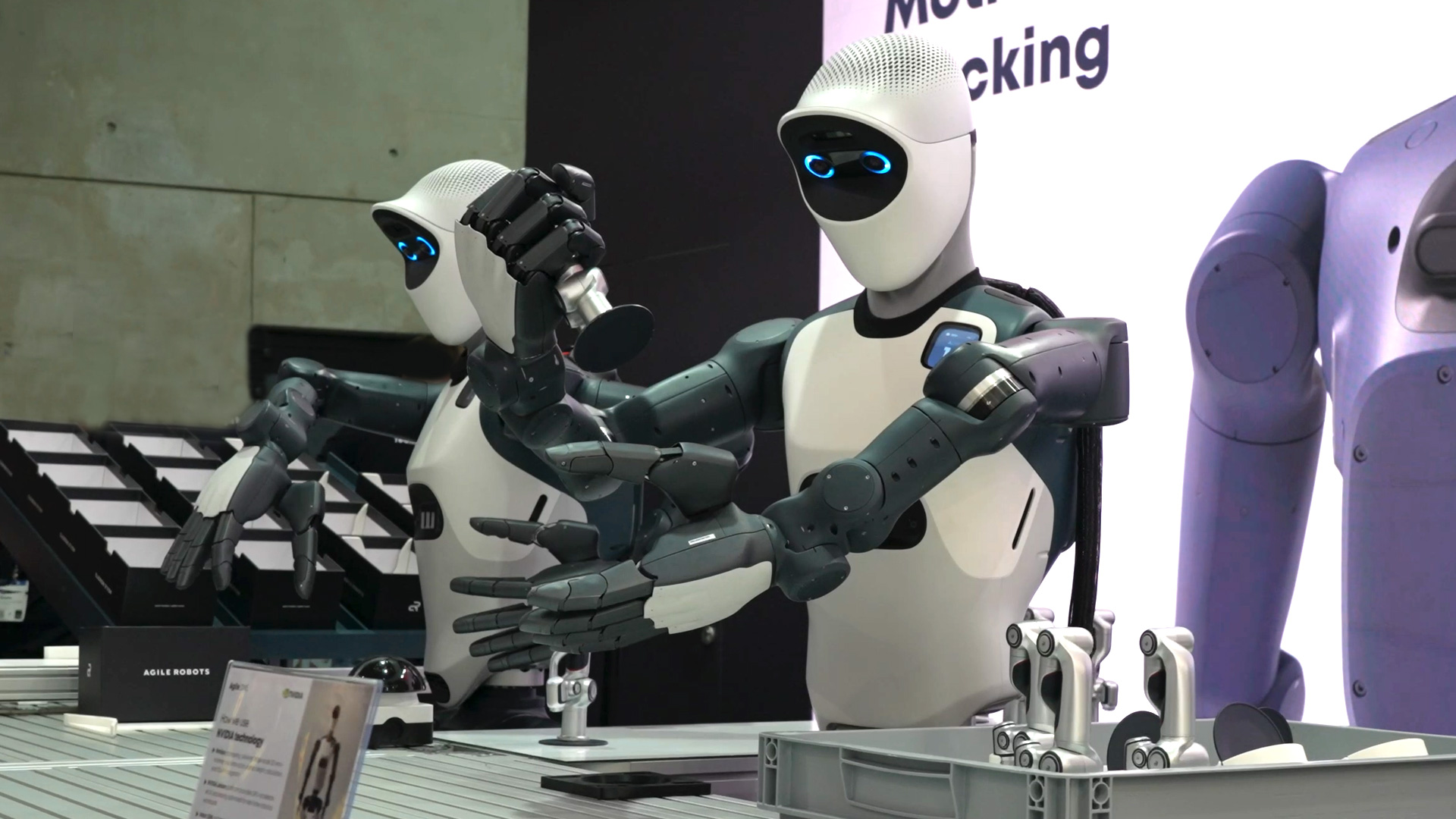
Agile Robots' humanoid Agile ONE, designed for flexible industrial production.
On this page
Investors are placing larger bets on robots that work in the physical world
Artificial intelligence is finding its way into factories, warehouses and industrial production lines. The companies building these systems are attracting growing interest from investors who see an opportunity to automate tasks that still require human coordination and physical judgement.
German robotics company Agile Robots has raised $500 million in a Series F funding round at a reported valuation of $8.5 billion.
The company announced the funding on November 12, 2026. SoftBank Group led the round, with participation from Nvidia, Hitachi Group, T.Capital and other investors.
What Agile Robots is building
Agile Robots develops industrial robotic arms, mobile robots, humanoid systems and the software that coordinates them.
Its technology is designed for manufacturing and other industrial environments where machines must interact with physical objects, respond to changing conditions and perform tasks with precision.
The company says it has deployed more than 20,000 robotic solutions worldwide.
Its work reflects a broader shift towards what the industry calls Physical AI: systems that combine AI models, sensors, software and mechanical equipment to operate in the real world.
Where the new funding will go
Agile Robots says the new investment will support expansion in the United States, increased production capacity in Germany and entry into additional markets.
The funding brings the company's total investment raised to approximately $2 billion.
The participation of Nvidia and major industrial investors also reflects the growing relationship between AI computing and robotics. Modern robots increasingly depend on powerful processors, advanced vision systems and software capable of interpreting their surroundings.
Can industrial robots move beyond controlled environments?
Factories offer relatively structured conditions for automation. A robot can be programmed to perform a repeated task in a defined space, with equipment and materials arranged around its operation.
More flexible robots face a harder challenge. They must recognise unfamiliar objects, respond to changing environments and perform tasks safely alongside people.
That is where advances in perception, machine learning and physical control become important.
The funding does not mean humanoid robots are ready to replace workers across industries. Commercial performance, reliability, maintenance costs and safety will determine how widely they are adopted.
Still, Agile Robots' latest funding round shows that investors are taking physical automation seriously. The next stage of AI competition may be fought not only through software and data centres, but also through machines operating on factory floors.
Sources: Agile Robots' official funding announcement · Reuters coverage, November 12