Knee and Hip Replacements Abroad: Navigating Early Mobilization and Long Flights Home

Published by
Kosmos Consult2 min read
Early movement is part of joint-replacement recovery, but it does not mean you are ready for a long flight. Plan physiotherapy, mobility support, clot prevention and surgeon-approved travel timing before leaving the treatment country.
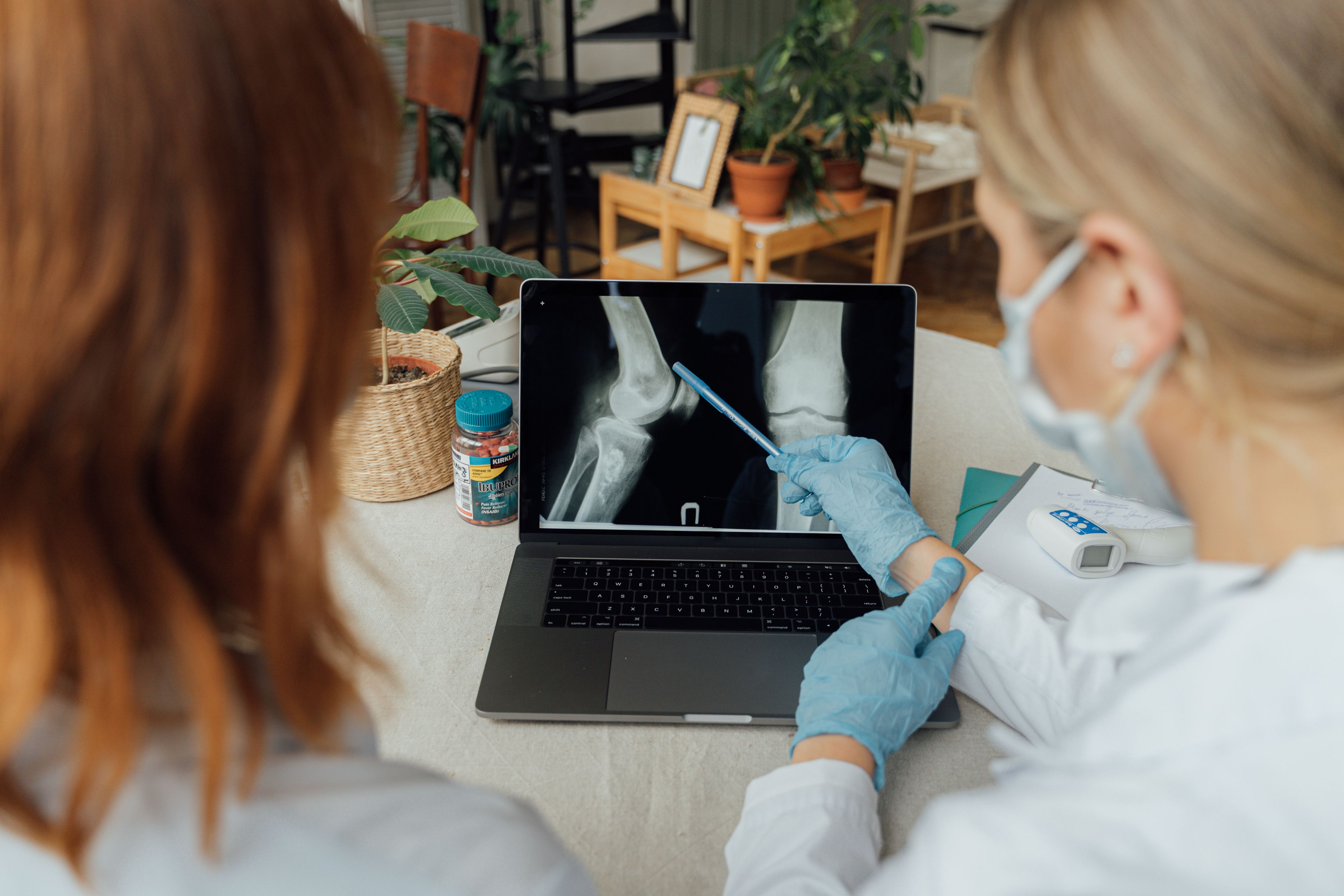
Healthcare professionals reviewing knee X-ray images with a patient during an orthopaedic consultation.
On this page
1. Why early mobilization matters
After a knee or hip replacement, the first steps often begin sooner than patients expect. Early, supervised movement helps recovery. But being able to walk along a hospital corridor does not mean you are ready to sit through a long international flight.
You need two separate plans: one for rehabilitation and another for the journey home.
Your physiotherapy team will usually help you begin standing and walking as soon as your clinical condition allows. You may use a walker or crutches and follow specific exercises to improve movement and strength.
Follow the instructions from your own surgical team. Do not increase walking distance, climb stairs or attempt exercises simply because another patient has progressed faster.
2. Plan the long flight separately
Recent joint replacement, reduced mobility and prolonged sitting can raise the risk of deep vein thrombosis (DVT). Swelling, discomfort and difficulty changing position can also make a long journey harder.
There is no single flight date suitable for everyone. Some hospitals advise waiting several weeks or longer after a joint replacement, particularly before long-haul travel. Your surgeon must assess your wound, mobility, clot risk, pain control and recovery before giving clearance.
Ask for written advice and check airline medical requirements before changing your ticket.
3. Arrange support for the airport
If cleared to travel, organise wheelchair assistance or other mobility support in advance. Ask how to manage stairs, long terminal walks, security checks and luggage.
Do not carry heavy bags or walk long distances against your physiotherapist's advice. Keep your walking aid accessible and ask whether you should continue prescribed clot-prevention medication or compression measures during travel.
Never start or change blood-thinning medication without your treating clinician.
4. Continue rehabilitation after returning home
Before discharge, obtain your operation report, implant details, medication list, physiotherapy instructions and follow-up schedule. Arrange a local physiotherapist or orthopaedic review before leaving the destination.
Seek urgent care for sudden breathlessness, chest pain, fainting or new one-sided leg swelling and pain.
Early movement is part of recovery. It is not a travel clearance. Let your surgeon decide when the long journey is safe.