How to Navigate Language Barriers and Hotel Recovery After Surgery Abroad

Published by
Kosmos Consult8 min read
Language barriers and unsuitable accommodation can complicate recovery after surgery abroad. Learn how to arrange reliable interpretation, prepare medical records, choose recovery accommodation and organise support after discharge.
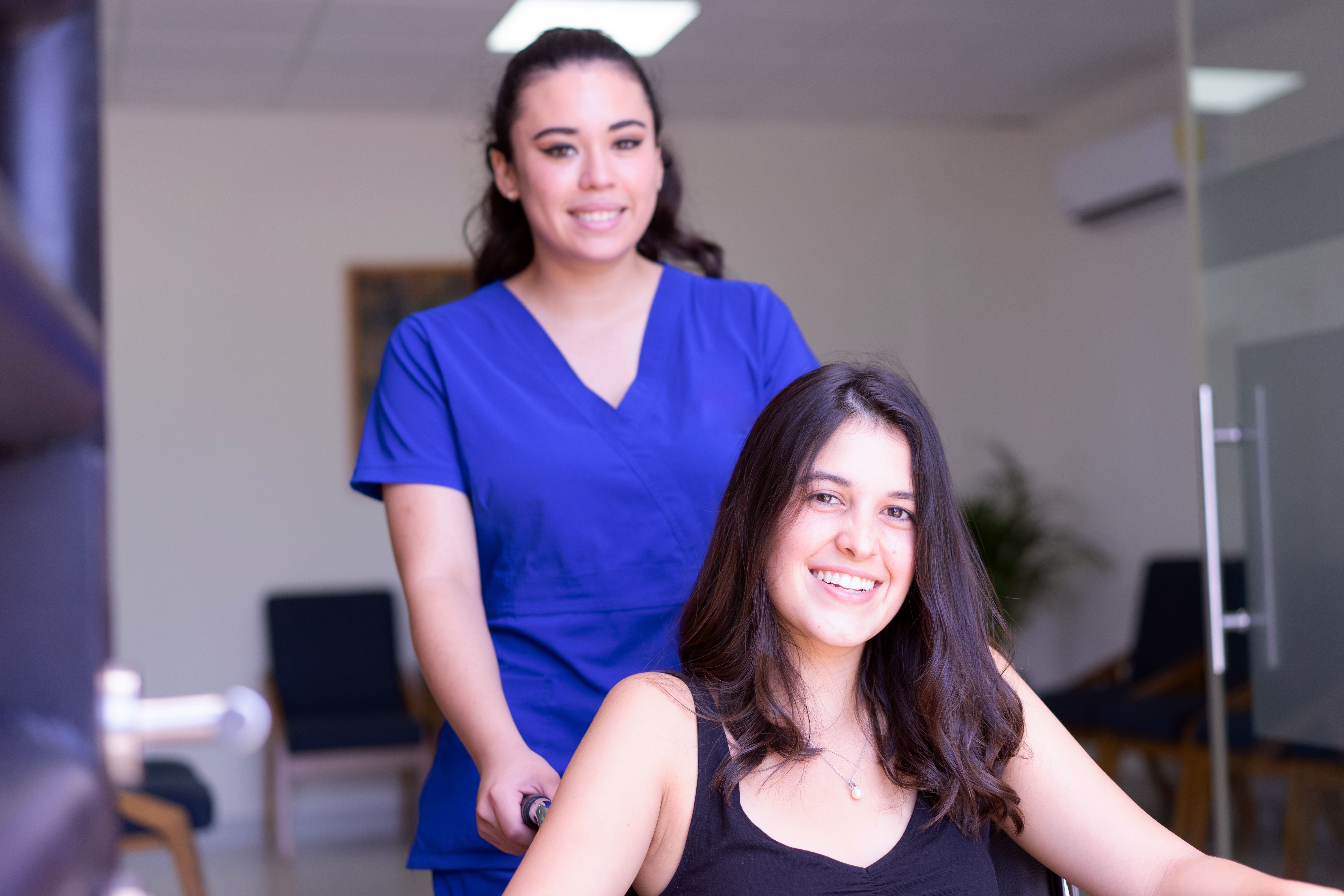
Patient recovering in accommodation after medical treatment abroad.
On this page
1. Do not assume everyone will speak your language
A successful operation does not automatically mean a smooth medical trip. Once you leave the hospital, you still need to understand your medication, follow wound-care instructions, communicate with local healthcare staff and recover somewhere suitable.
For international patients, two details can make this period particularly difficult: language barriers and the quality of accommodation after discharge.
They deserve attention before you board the flight, not after surgery.
A hospital may have excellent specialists and modern facilities, but that does not mean every nurse, pharmacist, receptionist or transport provider speaks your language.
A misunderstanding about medication dosage, an appointment time or a symptom that needs urgent attention can create unnecessary risks.
Before travelling, establish how communication will work at each stage:
-
During your initial consultation and medical assessment.
-
When discussing the procedure, risks and consent.
-
During hospital admission and treatment.
-
When receiving prescriptions and discharge instructions.
-
During follow-up appointments and emergency situations.
Do not rely entirely on a relative, a hotel employee or an untrained bilingual person to interpret clinical information. Medical discussions require accuracy, particularly when they involve consent, medication, allergies and post-operative instructions.
Where necessary, ask the hospital to arrange a qualified medical interpreter. If an interpreter is unavailable in person, ask whether telephone or video interpretation can be provided.
2. Prepare your medical information in advance
You should not have to explain your entire medical history from memory while recovering from surgery.
Keep digital and printed copies of your:
-
Diagnosis and previous treatment records.
-
Laboratory and imaging reports.
-
List of current medications and known allergies.
-
Surgical plan and relevant medical instructions.
-
Emergency contact details.
Where possible, have important documents translated into a language understood by the treating team. Ask the hospital to confirm that the translation is accurate enough for clinical use.
Keep the original reports too. A translated summary should not replace the original medical record.
You should also know how to explain basic concerns such as pain, dizziness, nausea, bleeding, breathing difficulty or an allergic reaction in the local language. A small translated medical phrase sheet can help, but it is not a replacement for an interpreter or emergency medical attention.
3. Understand the difference between language assistance and medical interpretation
Not every person who speaks two languages is qualified to interpret medical information.
A local representative may help you arrange transport, communicate with accommodation staff, find a pharmacy or understand everyday instructions. That support is useful, but it should not be confused with professional medical interpretation.
For important clinical conversations, use a qualified interpreter or a healthcare professional who can communicate effectively in your preferred language.
You should also ask the hospital to explain unfamiliar medical terms rather than simply accepting a translation you do not understand.
One useful practice is the teach-back method. After receiving an instruction, explain it back in your own words. For example, describe when you should take a medicine, how much to take and what symptoms should prompt you to contact the hospital. This gives the care team an opportunity to correct misunderstandings.
4. Choose recovery accommodation for your medical needs
A hotel room can look comfortable online and still be unsuitable for someone recovering from surgery.
The right accommodation depends on the procedure, your mobility, the expected recovery period and the level of assistance you need.
Before booking, consider:
-
Distance from the hospital: Choose accommodation with reasonable access to the treating facility, especially if repeat visits are expected.
-
Accessibility: Check for lifts, accessible entrances, suitable bathrooms and enough space to move safely with crutches, a walker or a wheelchair.
-
Bathroom safety: Ask about non-slip flooring, shower access, grab rails and whether assistance is available.
-
Cleanliness: Confirm that the room and bathroom are properly maintained. Ask how housekeeping is arranged if you need privacy or are unable to leave the room.
-
Food and medication: Consider whether meals can be arranged according to your doctor's instructions and whether any medication requires particular storage conditions.
-
Emergency access: Know how to contact reception, your medical coordinator and local emergency services at any hour.
A luxury hotel is not necessarily the best recovery accommodation. Accessibility, cleanliness, location and practical support matter more than decorative features.
5. Do not leave the hospital without understanding your discharge instructions
Discharge is a clinical decision, not simply the moment a hotel room becomes available.
Before leaving the hospital, make sure you understand your medication schedule, wound care, activity restrictions, diet, follow-up appointments and symptoms that require urgent medical attention.
Ask for written instructions in a language you understand. If the hospital cannot provide them in your preferred language, arrange a reliable translation and confirm the details with the clinical team.
You should also ask:
-
Who do I contact if my pain becomes worse?
-
What should I do if I develop a fever, unusual swelling or wound discharge?
-
When should I return for a wound check or follow-up appointment?
-
What activities and movements should I avoid?
-
Do I need someone to assist me with walking, bathing or taking medication?
Do not leave with unanswered questions simply because you are eager to return to your accommodation.
6. Arrange the right support after discharge
Some patients need little assistance after a minor procedure. Others may require help with mobility, meals, personal care, medication routines and hospital visits.
Be honest about what you can manage independently.
If you need clinical nursing assistance, arrange a qualified nurse. If you need help with cooking, errands, transport or everyday activities, an accommodation aide may be suitable. These are different responsibilities, and one should not be treated as a substitute for the other.
Patients who have undergone major surgery should also discuss whether they need a companion or another responsible adult during the initial recovery period. Some procedures and anaesthesia arrangements require supervision after discharge.
A hotel receptionist or ordinary housekeeping staff should never be expected to provide clinical care.
7. Have a plan for emergencies
Before settling into your accommodation, save the following information on your phone and keep a printed copy:
-
The hospital's emergency contact number.
-
The surgeon's or treating department's contact details.
-
The address of the nearest appropriate emergency facility.
-
Your medical coordinator's contact details.
-
Your medication list, allergies and procedure information.
Know how to request an ambulance or emergency assistance in the destination country.
If you experience severe or rapidly worsening symptoms, seek urgent medical attention. Do not wait for a travel coordinator to respond before contacting emergency services.
How Kosmos Consult supports international patients
Kosmos Consult coordinates medical travel arrangements for international patients, including hospital referrals, appointments, accommodation, airport assistance and practical support during their stay.
For patients travelling to India, the company can arrange language and cultural assistance through trained African medical students who speak patients' home languages. Local language support can also be arranged in other destinations where available.
Accommodation is coordinated through hotels and private accommodation providers, with the choice guided by the patient's requirements and budget. For patients who need additional assistance, employed nurses can be arranged at an additional cost. Accommodation aides can also help solo patients with cooking, errands and everyday tasks.
These services have different roles. Language support does not replace qualified clinical interpretation, and accommodation aides do not replace nurses or hospital care.
The arrangements should be discussed before travel so that patients know what is included, what costs extra and who is responsible for each service.
Before you travel: a practical checklist
- Confirm how medical interpretation will be provided.
- Carry copies of your medical records and medication list.
- Request written discharge instructions in a language you understand.
- Confirm the accommodation's accessibility and distance from the hospital.
- Establish whether you need a companion, nurse or accommodation aide.
- Save hospital and emergency contact details.
- Confirm follow-up appointments and transport arrangements.
- Understand the accommodation and support costs before making payment.
Medical treatment abroad should not leave you struggling to understand instructions or wondering where to turn after discharge. A well-planned recovery considers the hospital, the accommodation, communication and the support available when you need it.
The operation may take a few hours. Recovery takes longer, and the arrangements around it deserve the same careful attention.
Further reading
-
Related article: The True Cost of Medical Tourism: 7 Hidden Expenses Most Patients Forget to Budget
-
CDC, Medical Tourism: https://wwwnc.cdc.gov/travel/page/medical-tourism
-
CDC Yellow Book, Medical Tourism: https://www.cdc.gov/yellow-book/hcp/health-care-abroad/medical-tourism.html
-
Agency for Healthcare Research and Quality, Improving Patient Safety for Patients with Limited English Proficiency: https://www.ahrq.gov/health-literacy/professional-training/lepguide/chapter2.html
-
NHS, After Surgery: https://www.nhs.uk/tests-and-treatments/having-surgery/afterwards/