Chinese AI Firms Seek Overseas Nvidia Capacity Amid US Access Concerns

Published by
Kosmos Consult3 min read
Chinese AI companies are seeking access to Nvidia-powered computing capacity at overseas data centres as uncertainty grows over US rules governing remote access to advanced chips. The effort highlights how export controls are reshaping where AI infrastructure is built and used.
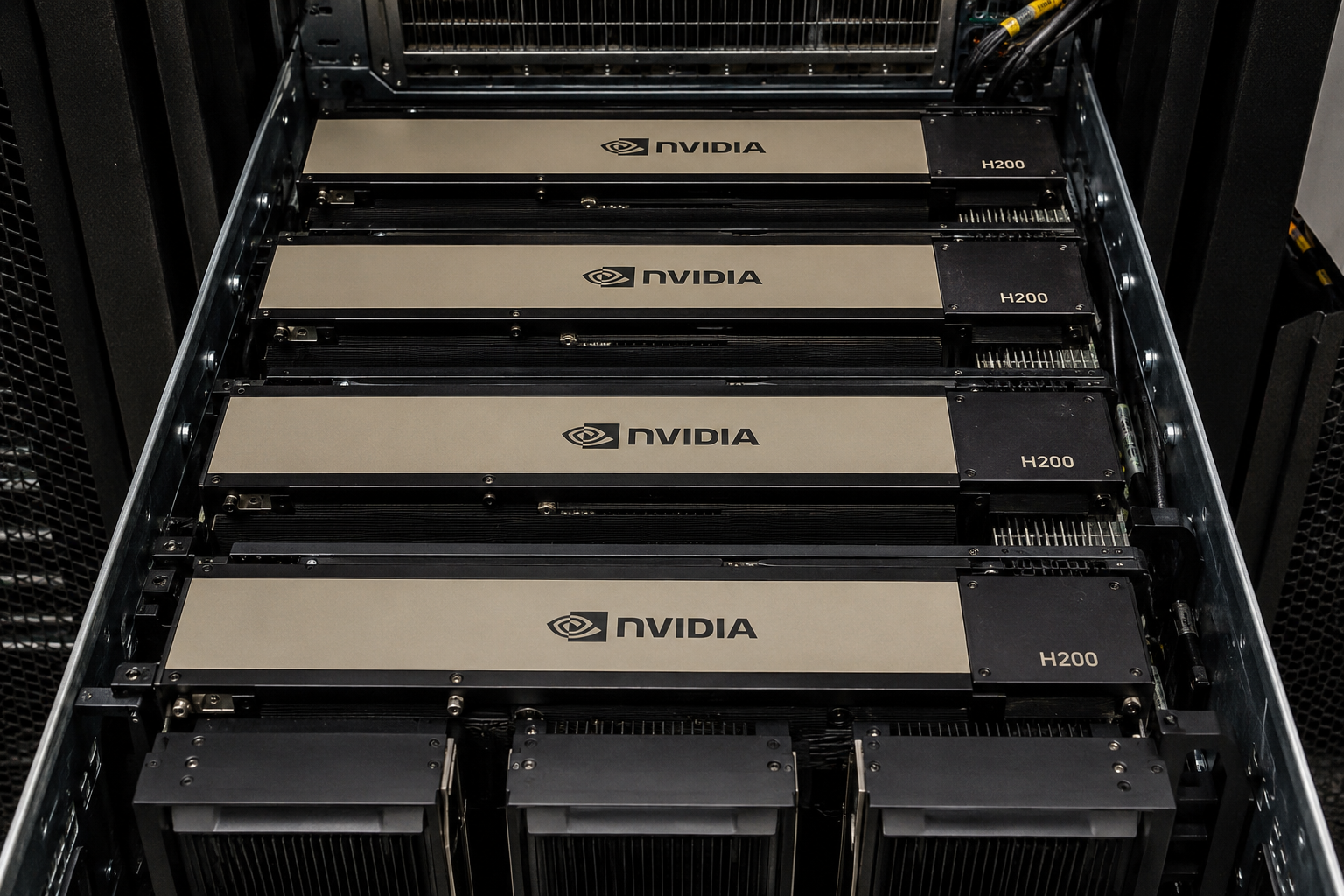
Nvidia H200 accelerator cards installed in a server chassis, illustrating the advanced computing hardware sought by AI companies.
On this page
Chinese AI companies are looking beyond domestic data centres
Chinese artificial intelligence companies are seeking to secure computing capacity powered by Nvidia chips at data centres outside China, according to a Reuters report published on November 12, 2026.
The reported interest includes discussions by a major Chinese cloud provider about overseas capacity, while smaller AI laboratories have approached data-centre operators, including companies in Southeast Asia.
The move reflects a difficult position for firms that need advanced processors to train and run AI models but face restrictions on access to some high-performance chips.
Why overseas computing capacity matters
AI companies need large amounts of computing power to train models, test new systems and serve users. When access to advanced processors becomes uncertain, renting capacity from a data centre in another country can appear to be an alternative.
But overseas hosting does not automatically remove legal or regulatory restrictions. The location of the hardware, the identity of the customer, the type of chip and the way remote access is provided can all matter under export-control rules.
That uncertainty is one reason companies are trying to understand what capacity they can secure and what conditions may apply.
A new point of attention in US export controls
The US House of Representatives has passed the Remote Access Security Act, which would give the Commerce Department authority to regulate certain remote access to restricted technology. The measure was awaiting Senate action at the time of the Reuters report.
The legislation points to a broader policy concern: advanced computing equipment can be physically located outside China while still being accessed remotely by organisations subject to US restrictions.
For regulators, the question is how to enforce controls when the hardware and the end user may be in different countries. For AI companies, the question is whether a cloud arrangement that is available today will remain permissible tomorrow.
A complicated market for chip access
The scramble for overseas capacity is taking place alongside continued efforts to enforce restrictions on the sale and diversion of advanced Nvidia processors.
Reuters also reported on separate investigations and allegations involving restricted chips. Those cases should be treated individually, and allegations that have not been established should not be read as proof of wrongdoing by the companies seeking overseas computing capacity.
The larger point is that AI infrastructure is becoming closely tied to trade policy and national security. Data-centre operators, chip suppliers and AI developers now have to consider not only the cost and performance of hardware, but also who may lawfully access it and from where.
Source: Reuters: Chinese AI firms seek Nvidia chip capacity overseas