Anthropic Introduces Claude Meetings, Bringing AI Into Live Workplace Discussions

Published by
Kosmos Consult3 min read
Anthropic has introduced Claude Meetings, a beta feature that brings its AI assistant into Google Meet calls. The assistant can follow discussions, answer questions and help teams create plans and work materials while a meeting is underway.
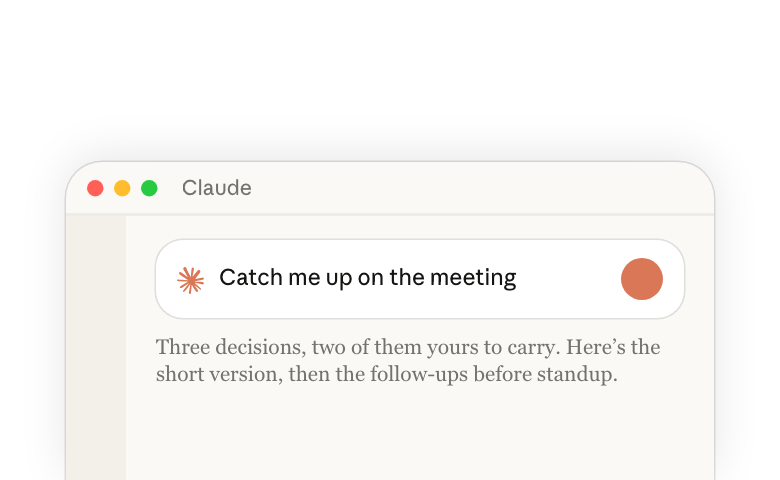
Claude product interface representing Anthropic's AI tools for workplace collaboration.
On this page
AI assistants are moving into the meeting room
Workplace AI is beginning to take a more active role in everyday collaboration. Instead of waiting for employees to upload documents or ask questions after a meeting, some assistants are now being designed to participate while conversations are happening.
Anthropic introduced Claude Meetings in November 2026. The beta feature allows Claude to join Google Meet calls as a visible participant, follow discussions and help teams produce work during the meeting.
The beta is initially available to Team and Enterprise customers.
What Claude Meetings can do
Claude can take notes, respond to questions and use connected workplace applications with permission.
It can also help create documents, whiteboards and presentations while participants are still discussing a subject.
This changes the role of an AI assistant in a workplace. A team discussing a project timeline, for example, can ask Claude to organise the proposed milestones into a document before the meeting ends.
Participants can also ask it to retrieve information from connected work applications, helping them access material without leaving the discussion.
Anthropic says meeting notes, action items and other generated materials remain available afterwards.
More than a meeting transcription tool
Anthropic's announcement also includes collaborative tools such as Claude Whiteboards and Claude Sheets.
Whiteboards allow teams to brainstorm and organise ideas with AI assistance. Sheets provides a way to create and edit spreadsheet-based work with Claude.
The company is also expanding interactive connectors that let users work with partner applications from within Claude.
These developments point towards a broader change in workplace software. AI assistants are becoming interfaces through which employees can access information, coordinate tasks and produce work across several applications.
The questions businesses should ask
An assistant that joins a meeting may hear confidential discussions, receive internal documents and generate materials that influence business decisions.
Companies should therefore establish clear rules about consent, meeting recording, access permissions, data retention and which meetings are appropriate for AI participation.
Employees should also review generated notes and action items. A transcription or summary can omit context, misunderstand a speaker or attribute a statement incorrectly.
Claude Meetings is still in beta, so its practical value will depend on reliability, privacy controls and how well it fits existing workplace processes.
For businesses, the larger development is clear: AI is moving from a tool employees consult occasionally to a participant in the work itself.
Sources: Reuters report on Claude Meetings, November 10 · Anthropic release notes