
Oxford Weidenfeld-Hoffmann Scholarship 2027: Fully Funded Graduate Study at Oxford

Published by
Kosmos Consult5 min read
The Weidenfeld-Hoffmann Scholarships and Leadership Programme supports eligible graduates from developing and emerging economies with full Oxford course fees, living support and leadership training.
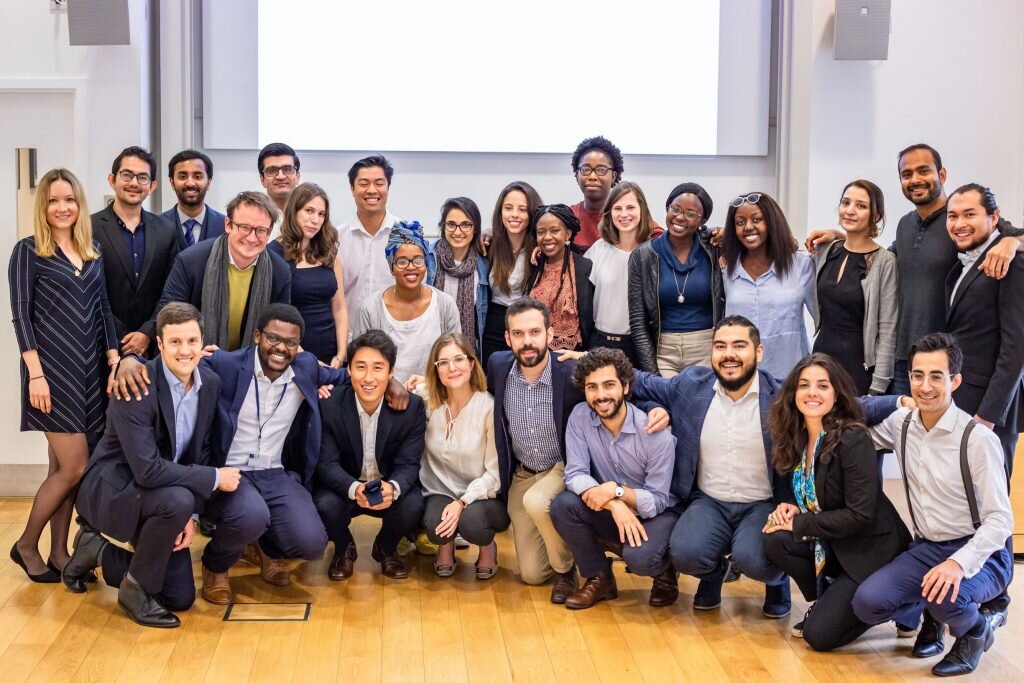
Participants at a Weidenfeld-Hoffmann Trust leadership programme gathering.
On this page
The University of Oxford is offering fully funded scholarships for outstanding graduates and early-career professionals from eligible countries through its Weidenfeld-Hoffmann Scholarships and Leadership Programme.
The award combines full course-fee funding and living-cost support with a year-long leadership programme. It is intended for people who want to use their education and professional experience to improve public life in their home countries or wider regions.
For the 2027–28 academic year, applicants must meet Oxford's country and course restrictions, demonstrate a clear commitment to returning to their country of ordinary residence, and submit a separate scholarship statement alongside their graduate application.
What the Scholarship Covers
Successful applicants receive:
- 100% coverage of their Oxford course fees.
- A living-cost grant of at least £21,805 for the 2027–28 academic year.
- Access to the Weidenfeld-Hoffmann Leadership Programme, including professional development, philosophical discussions, communication training and business skills.
- Long-term mentoring and networking opportunities through the programme's wider community.
The scholarship covers the full period during which you are liable to pay course fees for the agreed programme. The Leadership Programme is also part of the award, running across the academic year.
This is more than financial support. Scholars join a community built around public leadership, professional responsibility and the practical use of knowledge.
Who Can Apply?
The scholarship is open to applicants who are ordinarily resident in one of Oxford's eligible countries. The list includes countries across Africa, Asia, Europe, Latin America and the Middle East.
African countries on the current list include Liberia, Ghana, Nigeria, Kenya, Uganda, Rwanda, Sierra Leone, South Africa, Tanzania and Zimbabwe. The full list is published on Oxford's official scholarship page, and applicants should check their country against it before applying.
You must also meet these conditions:
- Be applying to start a new, eligible full-time graduate course at Oxford.
- Intend to return to your country of ordinary residence after completing your studies.
- Show a clear connection between your chosen subject and your longer-term professional goals.
- Explain how your future work will contribute to improving public life in your country, region or internationally.
- Secure an offer of admission to an eligible Oxford course.
Applicants holding deferred offers for 2027–28 are not eligible. Current Oxford students are also excluded unless they are already Weidenfeld-Hoffmann scholars.
There is no general age limit stated by the Trust. Academic strength matters, but your professional direction, public-service ambitions and ability to explain the impact you intend to make are central to the selection.
Which Courses Are Eligible?
The scholarship does not cover every graduate programme at Oxford. It supports a defined list of eligible courses, including:
- Master of Business Administration (MBA).
- Master of Public Policy (MPP).
- MSc African Studies.
- MSc Advanced Computer Science.
- MSc Economics for Development.
- MSc Global Health Science and Epidemiology.
- MSc International Health and Tropical Medicine.
- MSc Environmental Change and Policy.
- MSc Water Science, Policy and Management.
- MSc Sustainability, Enterprise and the Environment.
- MSc Social Data Science.
- MSc Migration Studies.
- Bachelor of Civil Law (BCL) and Magister Juris (MJur).
The list also includes other selected Master's programmes. It does not provide general funding for DPhil applications, so research applicants should not assume that a doctoral course qualifies.
Check the official eligible-course list before preparing your application. A strong profile cannot overcome an ineligible course choice.
How to Apply
You must apply for admission to an eligible Oxford course and submit a separate Weidenfeld-Hoffmann Scholarships Statement as part of the same application.
When completing the Oxford Graduate Application Form:
- Select your eligible course and complete the graduate application.
- Open the University's Scholarships section and select the Weidenfeld-Hoffmann Scholarships and Leadership Programme.
- Complete the official 2027–28 Weidenfeld-Hoffmann Scholarships Statement.
- Upload the statement together with your graduate application before the course's funding deadline.
- Complete all required supporting documents and references before submitting.
The scholarship statement is not optional. Oxford uses it alongside your graduate application to assess your eligibility, motivation, professional plans and intended contribution to public life.
Shortlisted applicants are expected to attend an online interview, likely in April 2027. Scholarship decisions are expected by the end of May 2027.
Application Deadline and What to Prepare
There is no single deadline covering every eligible course. Your application must reach Oxford by the relevant December 2026 or January 2027 deadline published on your chosen course page.
Applications held over for assessment against a later March deadline, or placed on a waiting list after the earlier funding deadline, are not eligible for this scholarship.
Prepare your academic transcripts, degree certificates, references, personal statement, course-specific documents and the completed Weidenfeld-Hoffmann Scholarships Statement well in advance.
Your scholarship statement deserves particular attention. It should explain why your chosen course matters to your professional goals, what public or development challenge you intend to address, and how you plan to use your Oxford education after returning home.
Oxford expects a coherent plan, not simply a declaration that you want to help your country. Show the connection between your past work, the knowledge you want to gain and the contribution you intend to make.


